

 See My Latest Article on HelloNation
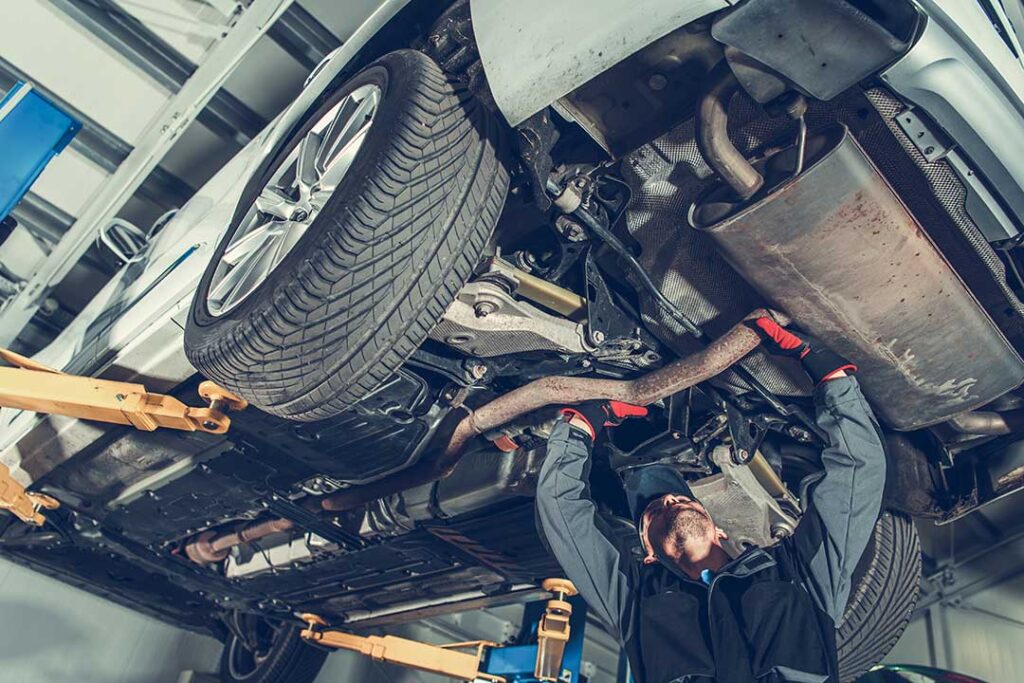
What Does the Muffler Do?
A muffler reduces the sound created by the engine’s exhaust gases. It is part of the exhaust system, which also directs fumes away from the passenger compartment and helps control emissions and noise.
The muffler is located toward the rear of most vehicles, but the complete exhaust system extends from the engine to the tailpipe. A problem in another section can create symptoms that seem like a muffler failure, so sound, smell, location, and vehicle behavior all matter.
What Are the Most Common Signs of a Damaged Muffler?
The clearest warning sign is a noticeable change in exhaust sound. A vehicle may become louder, deeper, raspy, or unusually metallic. The sound may be especially obvious during acceleration, when exhaust pressure increases.
Other common symptoms include:
- A hissing, tapping, rattling, or roaring noise beneath the vehicle
- A visible hole, crack, or loose section near the muffler or tailpipe
- Exhaust odor near the vehicle or inside the cabin
- Black soot around an exhaust connection
- Reduced fuel economy without another obvious explanation
- A check engine light, depending on the location and severity of the problem
- Vibration through the floor, seat, steering wheel, or pedals
- A tailpipe that appears to hang lower than usual
A sudden increase in noise is more concerning than a vehicle that has gradually become slightly louder. Sudden changes can indicate a broken pipe, failed hanger, cracked weld, or internal muffler damage.
How Can You Tell a Muffler Problem From Normal Exhaust Noise?
A healthy exhaust system normally produces a soft, steady sound from the tailpipe. It should not produce loud banging, sharp ticking, repeated popping, or a pronounced roar from underneath the vehicle.
Some sounds provide useful clues:
- Deep roaring: Often associated with a hole or split in the muffler or exhaust pipe.
- Rattling: May indicate loose internal muffler components, a broken heat shield, or a damaged hanger.
- Hissing: Can come from a small crack, gasket failure, or exhaust leak.
- Tapping near the engine: May point to an exhaust manifold or front-pipe leak rather than the muffler itself.
- Clunking over bumps: Often suggests a loose exhaust hanger or pipe contacting the vehicle body.
- Popping during deceleration: May involve an exhaust leak, fuel mixture issue, or engine problem.
A noise that changes when the engine speed changes is more likely related to the exhaust or engine than to the suspension. A noise that occurs mainly over bumps may be caused by loose exhaust hardware touching the underbody.
Can a Bad Muffler Affect Vehicle Performance?
A damaged muffler does not always reduce engine power. A small hole near the rear of the system may mainly create extra noise. However, severe internal damage or a restricted exhaust can interfere with the flow of exhaust gases.
Possible performance symptoms include:
- Sluggish acceleration
- Poor throttle response
- Reduced fuel economy
- Difficulty maintaining speed
- Stalling or rough running in more serious cases
A collapsed muffler or blocked exhaust component can create excessive back pressure. This condition may cause the engine to work harder and can lead to poor performance. Because similar symptoms can result from ignition, fuel, sensor, or catalytic converter problems, performance changes should not automatically be blamed on the muffler.
Is Exhaust Smell Inside the Vehicle Dangerous?
Yes. Exhaust odor inside the passenger compartment should be treated as a safety concern, not merely an inconvenience. Vehicle exhaust can contain carbon monoxide, an odorless and potentially life-threatening gas, along with other harmful pollutants.
If exhaust fumes are noticeable inside the vehicle:
- Stop driving when it is safe to do so.
- Open the windows while moving the vehicle only far enough to reach a safe location.
- Do not idle the vehicle inside a garage or enclosed area.
- Avoid using the vehicle until the source of the fumes has been identified and corrected.
A smell outside the vehicle can also indicate a leak, especially if the odor is stronger near the rear seat area, trunk, or underbody. Tucson’s hot climate often encourages drivers to use air conditioning with the windows closed, which can make any fumes entering the cabin harder to notice until the odor becomes persistent.
What Can Tucson’s Climate Do to an Exhaust System?
Heat and dust can contribute to exhaust-system wear, although rust is not the only cause of muffler failure. Repeated heating and cooling cycles cause metal to expand and contract. Over time, this can weaken welds, seams, and mounting points.
Vehicles may also experience damage from:
- Road debris striking the underside
- Speed bumps or uneven pavement
- Dust and grit collecting around brackets and shields
- Water trapped after occasional rain or vehicle washing
- Short trips that prevent the exhaust system from fully drying
- Long periods of outdoor parking under intense sun

In dry regions, people sometimes assume exhaust parts cannot corrode. Mufflers can still develop corrosion from condensation inside the system, especially when a vehicle is used mostly for short trips. External damage and metal fatigue may also occur without heavy visible rust.
Can You Inspect a Muffler at Home?
A basic visual inspection can reveal obvious problems, but the exhaust system should never be inspected while hot or while the vehicle is supported only by a jack.
After the vehicle has cooled completely, look from a safe position without placing any part of the body underneath it. Check for:
- A muffler that is hanging or tilted
- A missing rubber hanger
- Fresh black soot near joints or seams
- Dents, holes, cracks, or broken welds
- A tailpipe that is loose or touching the body
- Heat shields that appear loose
Do not tap hard on the muffler, pull on exhaust components, or attempt to seal a hole with household materials. Exhaust parts can retain heat for a long time, and weakened metal may break unexpectedly.
When Should a Muffler Problem Be Treated as Urgent?
A loud exhaust alone may not mean the vehicle will stop running, but certain signs require prompt attention. Avoid continued driving if there is exhaust odor inside the cabin, a visibly detached pipe, a component dragging on the road, smoke under the vehicle, or a sudden major loss of power.
A loose exhaust part can fall off, contact hot or moving components, or create a road hazard. Fumes can also enter through openings in the floor, trunk, doors, or ventilation system. Children, older adults, and people with respiratory conditions may be especially sensitive to poor air quality inside a vehicle.
A dashboard warning light should not be ignored, particularly when it appears with rough running, reduced power, or unusual exhaust odor. The warning may involve an oxygen sensor, catalytic converter, or another emissions-related component rather than the muffler itself.
Does a Muffler Need Replacement or Can It Be Repaired?
The answer depends on the type and location of the damage. A small crack in an accessible section may sometimes be repaired, while a muffler with extensive corrosion, internal breakage, or damaged mounting points may require replacement.
Repair decisions generally depend on:
- Whether the metal around the damage is still solid
- The size and location of the leak
- The condition of nearby pipes, clamps, and hangers
- Whether internal muffler components are loose
- Whether the part is original or has already been repaired
- Whether the exhaust system remains safely secured
A temporary patch may reduce noise but will not correct a loose hanger, blocked component, or leak located elsewhere. The entire exhaust path should be considered rather than judging the muffler by sound alone.
What Is the Most Reliable Way to Confirm the Problem?
The most reliable confirmation combines a sound check, visual inspection, and leak diagnosis after the exhaust system has cooled. A technician may also inspect hangers, heat shields, gaskets, oxygen sensors, and the catalytic converter because several parts can produce similar symptoms.
For drivers, the most useful information to record is when the sound occurs, whether it changes during acceleration, whether fumes are present, and whether the vehicle recently struck debris or a rough section of pavement. These details can help distinguish a rear muffler problem from a leak closer to the engine or a separate mechanical issue.